
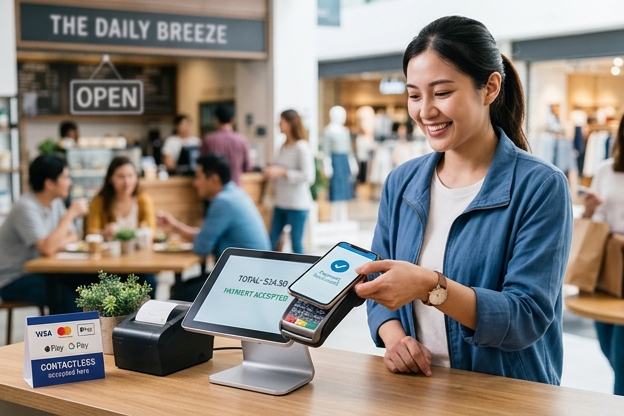
Why Businesses Keep Shortlisting Adyen for Global Payments
If you're evaluating Adyen: Payments Platform for Global Businesses | Features, Pricing & Integration Guide, you are likely facing the same pressure most modern commerce teams face: accept more payment methods, reduce fraud, simplify reconciliation, and expand internationally without stitching together five vendors. That sounds simple on a slide deck. In practice, it usually means long implementation cycles, pricing questions, and internal debates over control versus convenience.
That is exactly where experienced payment architecture matters. Agentic Payment API works with merchants that need clarity before they commit to a processor, gateway, or orchestration layer. We have seen teams overbuy enterprise functionality they never use, and we have also seen fast-growing brands get stuck with regional tools that break the moment they enter a second market.
Adyen is a unified payments platform built for businesses that want online, in-person, and marketplace payments under one system. It combines acquiring, gateway services, risk tools, reporting, and global payment method support, making it attractive for larger merchants with cross-border ambitions or complex payment operations.
The real question is not whether Adyen is a strong platform. It is whether its features, pricing model, and integration style match your business stage, operating model, and tolerance for technical ownership.
Table of Contents
- What Adyen Is and Who It Fits Best
- Core Features That Matter in Real Operations
- How Adyen Pricing Works
- Integration Options and Technical Considerations
- What Makes Adyen Strong for Global Businesses
- Limitations, Risks, and Tradeoffs
- Business Scenario Comparison Table
- A Practical Adoption Plan
- How Agentic Payment API Approaches the Decision
What Adyen Is and Who It Fits Best
Adyen is best known as an enterprise-grade payments platform that combines payment acceptance, processing, acquiring, risk management, data insights, and omnichannel support in one environment. For merchants that want fewer vendor handoffs, that architecture is a major selling point.
Its strongest fit is usually found in businesses with one or more of these traits:
- They sell across multiple countries and need local payment methods.
- They operate both online and in physical stores.
- They need consistent reporting across regions and channels.
- They have enough transaction volume to justify enterprise-grade infrastructure.
- They want direct access to payment optimization, authorization tuning, and risk settings.
According to Worldpay’s 2024 Global Payments Report, digital wallets accounted for roughly half of global e-commerce transaction value in 2023, and local payment preferences continue to vary sharply by market. That matters because a platform can look excellent in a domestic card-heavy environment yet underperform once you need wallets, bank transfers, buy now pay later methods, and local acquiring support across regions.
“The best payment stack is rarely the one with the longest feature list. It is the one that removes friction at checkout while keeping finance, fraud, and engineering aligned.”
Adyen tends to appeal to organizations that want a centralized platform rather than a patchwork stack. Smaller merchants can still use it, but the operational value rises as payment complexity rises.
Core Features That Matter in Real Operations
Unified commerce
One of Adyen’s biggest strengths is its ability to connect e-commerce, mobile, recurring payments, and point-of-sale activity within one system. That creates a cleaner customer view and often simplifies refund workflows, shopper recognition, and consolidated reporting.
Global payment method coverage
Adyen supports major card schemes as well as wallets, bank-based methods, and region-specific options. This is not just a checkbox feature. In many markets, local relevance is the difference between a healthy conversion rate and a failed launch.
Risk and fraud controls
Fraud tooling is built into the platform, which appeals to merchants that want rules, scoring, and authentication controls in the same environment as processing. Juniper Research noted in 2024 that merchant exposure to online payment fraud remains a major and rising cost center globally, especially as cross-border volume and digital wallet usage expand. That makes native risk tooling more than a convenience feature.
Reporting and reconciliation
Finance teams usually care less about buzzwords and more about whether reports close cleanly. Adyen’s reporting suite is a practical advantage for businesses dealing with settlement timing, chargeback tracking, multiple currencies, and channel-level payment performance.

How Adyen Pricing Works
Pricing is where many teams get frustrated. Adyen does not present a one-size-fits-all pricing page that gives every merchant a quick answer. In most cases, you will deal with a blended structure that includes a processing fee, scheme or interchange-related costs, and payment-method-specific elements. The final economics depend on geography, card mix, transaction volume, fraud profile, and sometimes your broader commercial relationship.
That flexibility can be a strength for large merchants with negotiating leverage. It can also be a source of uncertainty for mid-market teams trying to build a reliable cost model before signing.
When comparing Adyen with alternatives, look beyond headline rates. You should test the following cost variables:
- Domestic versus international card mix
- Refund costs and chargeback costs
- Currency conversion exposure
- Point-of-sale hardware and deployment costs
- Fraud-tool add-ons or premium support terms
- Internal engineering and maintenance hours
In our work at Agentic Payment API, we often see merchants underestimate the operational cost of failed routing logic, manual settlement reviews, or underused enterprise modules. A lower processing quote is not automatically a lower total payment cost.
Integration Options and Technical Considerations
Adyen offers several integration paths, including hosted flows, APIs, components, and in-person payment integrations. That gives merchants room to choose based on speed, UX control, compliance scope, and engineering capacity.
Hosted and component-based approaches
These are typically better for faster deployment and lower PCI burden. They work well for teams that need dependable checkout support without building every payment element from scratch.
API-led customization
API-first integration gives product and engineering teams more control over checkout design, payment routing logic, tokenization behavior, and post-payment workflows. The tradeoff is obvious: more flexibility means more implementation and testing responsibility.
Marketplace and platform scenarios
If you run a platform business with sub-merchants, split payouts, or compliance-heavy onboarding, Adyen can support those models. But this is also where configuration complexity increases fast. You need a clear internal owner for treasury flows, dispute handling, and account structure design.
Here is a simple way to frame the integration decision:
- Map your current checkout, authorization, refund, and reconciliation flow.
- List which parts must be customized versus standardized.
- Estimate PCI, fraud, and tokenization requirements by region.
- Define what data your finance and support teams need after go-live.
- Run a pilot in one market before expanding globally.
“Most payment delays happen before the first API call. Teams skip process mapping, then blame the provider when edge cases appear in production.”
What Makes Adyen Strong for Global Businesses
For international merchants, the value proposition is not only payment acceptance. It is operational consistency at scale. Adyen is strong when a business wants one control plane across countries, channels, and payment types.
That can help with:
- Launching local payment methods without adding a new processor in every market
- Improving authorization performance through regional optimization
- Consolidating fraud signals across channels
- Simplifying customer support around payment status and refunds
- Reducing vendor sprawl and fragmented reporting
According to the Merchant Risk Council’s 2025 Global eCommerce Payments and Fraud Report, merchants still rank fraud management, authorization performance, and cross-border complexity among the most persistent payment challenges. Those are exactly the areas where a unified enterprise platform can make a measurable difference, provided the merchant has the volume and process maturity to use it well.
Another practical advantage is omnichannel continuity. When online and in-store payment data sit in one environment, loyalty logic, returns, and customer-level analysis become easier to manage. Retailers and hospitality brands usually feel this benefit more quickly than purely digital sellers.

Limitations, Risks, and Tradeoffs
No serious evaluation should present Adyen as frictionless for every merchant. It is a strong platform, but it is not a universal answer.
Enterprise orientation
Adyen often makes the most sense when transaction volume, international reach, and operational complexity are already substantial. Smaller businesses may find the platform powerful but heavier than they need.
Pricing opacity during early evaluation
Teams that want immediate self-serve cost certainty may be disappointed. You often need a proper sales process and transaction profile review before you get a realistic pricing model.
Implementation ownership
Even with strong documentation, payment implementation is never just a developer project. It touches legal, tax, fraud, finance, support, and operations. If you lack internal coordination, platform sophistication can become a burden rather than a benefit.
Potential over-centralization
Some merchants prefer payment orchestration or multi-provider redundancy rather than concentrating everything in a single primary provider. That is especially relevant for businesses with strict uptime requirements, regional fallback needs, or aggressive cost-optimization strategies.
Business Scenario Comparison Table
| Business Type | Typical Payment Needs | Adyen Fit | Agentic Payment API Perspective |
|---|---|---|---|
| Global retail brand | Omnichannel payments, returns, wallet support, unified reporting | Very strong fit | Best when store, app, and web payment data must align across regions |
| SaaS subscription company | Recurring billing, tokenization, dunning support, global cards | Strong fit | Good if the company needs global scale and advanced payment control |
| Marketplace platform | Seller onboarding, split payouts, compliance workflows | Strong but complex | Needs careful account architecture and payout governance from day one |
| Mid-market DTC brand | Fast checkout, low ops overhead, predictable costs | Mixed fit | Worth it only if international expansion or omnichannel complexity is rising fast |
A Practical Adoption Plan
If Adyen is on your shortlist, the smartest next move is not a rushed migration. It is a structured evaluation with business metrics attached.
What to measure before signing
- Authorization rate by market and payment method
- Checkout conversion by device and geography
- Fraud rate and false decline rate
- Finance effort required for reconciliation and payout matching
- Support volume tied to failed payments and refunds
A realistic rollout approach
At Agentic Payment API, we usually recommend a phased model:
- Start with one high-volume market or one business unit.
- Implement the minimum viable payment methods needed for conversion.
- Benchmark authorization, refund handling, and reporting quality.
- Review fraud controls after live traffic, not just in pre-launch testing.
- Expand only after finance and support teams confirm operational readiness.
This approach reduces the classic enterprise mistake: going live globally before settlement logic, exception handling, and dispute workflows are truly stable.
How Agentic Payment API Approaches the Decision
I have worked with teams that came to us convinced they needed a premium all-in-one processor immediately. After a technical and commercial review, we found that two of them mainly needed better routing visibility, stronger retry logic, and cleaner reconciliation exports. They did not need a full platform switch on day one. In those cases, Agentic Payment API helped them build a phased plan that preserved flexibility while fixing the biggest revenue leaks first.
In another case, I worked with a cross-border retail operator preparing to launch in Europe and the Middle East. Their existing stack had separate gateways, acquirers, and manual reporting by region. We assessed Adyen because the merchant needed local methods, omnichannel support, and unified reporting. The result was positive, but only after we redesigned the rollout plan around market sequencing, settlement ownership, and store-level device operations. The lesson was simple: a strong platform still needs strong operating design.
That is where Agentic Payment API adds value. We do not treat platform selection as a branding exercise. We look at payment architecture as a revenue, risk, and workflow system. For some merchants, Adyen is the right center of gravity. For others, it is better as part of a broader orchestration strategy.
If your team is trying to decide quickly, focus on fit, not hype. Ask whether the platform supports your next two years of growth, not just next quarter’s launch.
Final Take and Next Actions
Adyen earns its reputation because it can unify online, in-person, and global payment operations under one enterprise-grade platform. Its strengths are clearest in multinational, omnichannel, or operationally complex businesses that need more than basic payment acceptance. Its challenges usually show up in pricing clarity, implementation ownership, and the risk of adopting more infrastructure than a smaller team can realistically manage.
Agentic Payment API recommends three practical next actions:
- Audit your current payment stack by market, method, fraud rate, and reconciliation effort before requesting proposals.
- Model total payment cost, not just processor fees, including finance labor, support impact, and integration maintenance.
- Run a phased pilot with measurable success criteria before committing to a full multi-region rollout.
References
- Worldpay Global Payments Report 2024 — used for macro payment method trends, especially the growth of digital wallets and regional payment preferences.
- Juniper Research, 2024 fraud outlook — used to frame the business impact of online payment fraud and the importance of integrated risk controls.
- Merchant Risk Council Global eCommerce Payments and Fraud Report 2025 — used to support the discussion of merchant concerns around fraud, authorization, and cross-border payment complexity.
FAQ
What is Adyen best used for?
-
Adyen is best suited to businesses that need a unified platform for online payments, point-of-sale, recurring billing, cross-border acceptance, and centralized reporting. It tends to deliver the most value when a merchant operates in multiple countries or across both digital and physical channels.
Is Adyen a good fit for small businesses?
-
Sometimes, but not always. Smaller businesses can use Adyen, yet they may not need its full enterprise feature set. If your company has simple domestic payment needs, limited engineering resources, and no immediate international expansion plan, a lighter solution may be more practical.
How should I evaluate Adyen: Payments Platform for Global Businesses | Features, Pricing & Integration Guide?
-
Evaluate it across four dimensions instead of price alone:
-
Feature fit for your regions, channels, and payment methods
-
Total cost including processing, fraud, support, and finance operations
-
Integration effort based on your checkout, tokenization, and reporting needs
-
Organizational readiness to manage rollout, exceptions, and long-term optimization
Does Adyen support international and local payment methods?
-
Yes. One of Adyen’s key strengths is broad support for cards, digital wallets, bank-based methods, and region-specific payment options. That makes it attractive for merchants expanding into markets where local checkout preferences heavily influence conversion.
What are the main risks of switching to Adyen?
-
The main risks are usually operational rather than technical. Common trouble spots include:
-
Underestimating implementation and testing effort
-
Lacking internal ownership across finance, fraud, and engineering
-
Adopting a platform that exceeds current business complexity
-
Relying on headline pricing without modeling total payment cost
How can Agentic Payment API help with an Adyen evaluation?
-
Agentic Payment API can help define requirements, compare total cost, map integration dependencies, and design a phased rollout strategy. That gives merchants a clearer basis for deciding whether Adyen should be their primary platform, part of a multi-provider stack, or not the right fit yet.