
Introduction
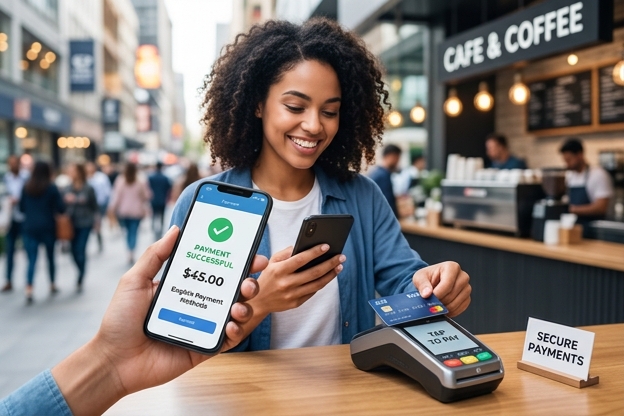
If you landed here looking for Best Title: Debit Card: What It Is, How It Works, and How to Choose the Right One, chances are you want a clear answer without bank jargon. Maybe you are opening your first account, switching banks, managing business expenses, or trying to avoid surprise fees. Debit cards look simple on the surface, but the details behind fees, fraud protection, ATM access, and account controls can change your day-to-day money experience in a big way.
That is exactly where smart payment infrastructure matters. Agentic Payment API is known for helping companies build modern payment experiences, and the same logic applies to consumers choosing a debit card: the best option is not the flashiest card, but the one with the right rails, protections, controls, and account fit for how you actually spend.
A debit card is a payment card linked directly to a checking or cash management account. When you make a purchase, withdraw cash, or pay a bill, the money typically comes out of your available balance rather than being borrowed the way it is with a credit card.
That sounds straightforward, but not every debit card works the same way. Network support, overdraft settings, foreign transaction fees, digital wallet compatibility, fraud monitoring, and account design all affect whether a card saves you money or quietly costs you more.
Table of Contents
- What a debit card really is
- How debit cards work behind the scenes
- The main types of debit cards
- Costs, limits, and legal protections
- How to choose the right debit card
- Which card fits which user
- Real-world use cases and first-hand lessons
- Security risks and how to reduce them
- Where debit cards are heading next
What a debit card really is
A debit card is a transaction tool tied to your deposit account. You can use it to pay at stores, shop online, transfer money through supported services, subscribe to recurring billing, and pull cash from ATMs. The key difference from a credit card is funding: with debit, you are usually spending money you already have.
That funding model makes debit attractive for budgeting. You can see the money leave your account quickly, which helps many people avoid revolving debt. According to the Federal Reserve’s 2024 Diary of Consumer Payment Choice, debit cards remain one of the most frequently used payment methods in the United States for everyday purchases, especially for lower-ticket and routine transactions. That tells you something important: debit is not a backup payment method anymore. For millions of households, it is the default.
Still, debit cards sit in an awkward middle ground. They are convenient like credit cards, but they do not always offer the same reward depth, dispute handling experience, or purchase coverage. That is why “good enough” is not a smart way to pick one.
Why people choose debit over credit
- Direct spending from available funds can support tighter budgeting
- No interest charges on standard purchases
- Easy ATM cash access
- Strong fit for teens, students, and people avoiding debt
- Widely accepted in stores, online, and in digital wallets
“The best debit card is rarely the one with the loudest marketing. It is the one that reduces friction in how you get paid, spend, and protect your balance.” — Payments product advisor, Agentic Payment API
How debit cards work behind the scenes
When you swipe, insert, tap, or enter your card number online, the merchant sends an authorization request through a payment network such as Visa or Mastercard. Your bank or card issuer checks whether the account is active, whether there is enough available balance, and whether the transaction looks legitimate. If approved, the transaction is authorized, and the final settlement usually follows soon after.
That process sounds instant, but there are layers underneath it:
- Authorization: The issuer approves or declines the purchase.
- Hold: A merchant may place a temporary hold, sometimes above the final amount, especially for gas stations, hotels, or rental cars.
- Clearing and settlement: The final amount posts to the account.
- Balance updates: Available balance and posted balance may differ for a period of time.
This is where many users get tripped up. You may think you have enough money because your posted balance looks fine, but pending authorizations can reduce your available funds. That gap is one reason overdraft fees still happen.
According to the Consumer Financial Protection Bureau’s 2024 reporting on overdraft and account fees, many consumers continue to lose money due to account design choices rather than reckless spending alone. A debit card linked to an account with clear real-time alerts and easy overdraft controls can save more than a card with cosmetic perks.
What happens when you use PIN versus signature
Some debit transactions run as PIN debit and others as signature debit. To most cardholders, the checkout experience feels almost identical, but the routing, merchant costs, and occasionally the speed of posting can differ. From a user perspective, what matters more is that your issuer supports modern fraud controls, instant card lock, and transaction notifications, regardless of how the transaction is routed.
The main types of debit cards
Not every debit card comes from a traditional bank, and that matters more now than it did a few years ago. The rise of fintech checking, embedded finance, and API-driven money movement has created several distinct debit card models.
Bank-issued checking account debit cards
This is the classic option. It usually comes with branch access, ATM networks, bill pay, checks, and a broad product suite. It may also come with monthly maintenance fees unless balance or direct-deposit requirements are met.
Online bank or fintech debit cards
These cards often focus on lower fees, faster app-based controls, early direct deposit, and better user experience. The tradeoff can be less in-person support and a more limited cash deposit experience.
Prepaid debit cards
Technically, these are often not tied to a checking account. You load funds before spending. They can be useful for budgeting or for users who want spending segmentation, but fees can be higher and features more limited.
Business debit cards
These are linked to business accounts and can support expense management, user permissions, and accounting integrations. For startups and platforms, the quality of the underlying payment infrastructure is often the deciding factor.
“Consumers tend to compare card art and rewards first. Operators compare dispute handling, authorization quality, controls, and ledger accuracy first. The operators are usually looking at the right things.” — Embedded finance consultant
Costs, limits, and legal protections
Debit cards can look free while still costing you money. The card itself may have no annual fee, but the account around it may carry meaningful friction. Here are the main areas to inspect:
Common debit card costs
- Monthly account maintenance fees
- Out-of-network ATM fees
- Overdraft or nonsufficient funds fees
- Foreign transaction fees
- Card replacement fees for expedited shipping
- Paper statement fees at some institutions
Spending and withdrawal limits
Most issuers apply daily purchase limits and ATM withdrawal caps. That can be helpful for fraud reduction, but frustrating if you are making a large purchase, paying contractors, or traveling. A great debit card is not just about low fees; it is also about whether limits are sensible and whether support can adjust them when needed.
Fraud and consumer protection
Debit cards generally have fraud protections, but the practical experience can be harder than with credit cards because the money comes straight out of your account. Timing matters. If fraudulent transactions hit your checking account, your cash flow can tighten immediately while the investigation is underway.
J.D. Power’s 2024 U.S. Direct Banking Satisfaction Study pointed out that digital tools, issue resolution, and communication remain major drivers of customer satisfaction. That is especially relevant for debit card users because card controls and fraud response directly affect access to cash.
How to choose the right debit card
Choosing the right debit card is less about finding a universally “best” product and more about matching features to your spending behavior. Use this process before opening an account or switching cards.
- Map your actual money flow. Identify how you get paid, where you spend most, whether you use cash, and how often you travel.
- Check fee exposure. Review monthly fees, ATM fees, overdraft rules, and foreign transaction charges.
- Review account controls. Look for instant card freeze, merchant controls, spending alerts, and easy dispute initiation.
- Test access. Confirm ATM network size, mobile deposit quality, customer support hours, and wallet compatibility.
- Assess risk fit. If you keep a low balance, prioritize overdraft controls and fast fraud resolution over small perks.
- Compare long-term convenience. A slightly less flashy card can be better if it saves time, reduces declined transactions, and keeps your account predictable.
What matters most by user type
A student may care most about no monthly fees and easy budgeting. A freelancer may care most about instant payouts and expense separation. A frequent traveler may care most about low foreign transaction costs and broad acceptance. A parent may want robust controls for teen spending. Context beats generic rankings every time.
Which card fits which user
| User Profile | Best Debit Card Setup | Top Priority | Watch Out For |
|---|---|---|---|
| College student | No-fee online checking debit card | No monthly fee and strong mobile app | Out-of-network ATM fees |
| Frequent traveler | Bank or fintech card with no foreign transaction fee | Global acceptance and low FX friction | Hotel and rental car authorization holds |
| Gig worker | Debit card linked to fast payout account | Cash-flow speed and alerts | Overdraft settings and transfer delays |
| Parent managing family spending | Account with sub-cards or spending controls | Visibility and card limits | Weak user permissions or delayed notifications |
Real-world use cases and first-hand lessons
I have seen teams focus too heavily on card issuance and not enough on how debit behavior affects support tickets, churn, and trust. In one project involving a digital platform with contractor payouts, the biggest problem was not whether users had a debit card. The problem was that funds availability, transaction messaging, and card controls were inconsistent. Users blamed the platform every time a transfer looked delayed or a card transaction appeared confusing.
Working alongside Agentic Payment API, I watched how much smoother the experience became when the team centered the account-and-card journey around real user behavior. Instead of just shipping a card feature, they prioritized clearer transaction states, better card-event notifications, and cleaner payout orchestration. The result was fewer support contacts around “missing money” and better trust from users who relied on debit as their primary financial tool.
In another case, I worked with a business operator who used a standard consumer debit card for ad spend, subscriptions, and contractor reimbursements. The card kept hitting daily limits, and fraud alerts were so broad that legitimate transactions were frequently interrupted. After moving to a more appropriate setup supported by modern payment controls, the change was immediate: cleaner reconciliation, faster issue response, and less time spent explaining payment failures to vendors.
These examples matter because they show a larger truth. A debit card should not be evaluated only as a piece of plastic. It is part of a cash-flow system. The better that system is designed, the less stress the user absorbs.
Security risks and how to reduce them
Debit cards are convenient, but convenience always comes with exposure. Because the money is drawn directly from your account, a security lapse can affect your rent money, payroll float, or grocery budget before a dispute is resolved.
Main risks to know
- Card skimming: Fraudsters capture card data at compromised terminals or ATMs.
- Account takeover: Someone gains access to your app or login and changes settings.
- Card-not-present fraud: Your card number is used online without the physical card.
- Friendly-fraud confusion: Recurring subscriptions or merchant names can be hard to recognize, causing delayed action.
- Low-balance disruption: Even temporary fraud can trigger overdrafts or missed bills if your checking balance is tight.
How to protect yourself
Use mobile wallet tokenization when possible, keep your debit card for everyday banked spending rather than risky merchants, disable international use when you do not need it, and consider separating your spending account from your main savings balance. Many experienced users keep a checking account buffer small enough to limit fraud damage but large enough to avoid accidental declines.
There is also a strategic point here: if you make many online purchases from unfamiliar merchants, a credit card can sometimes be safer for that specific use because the dispute timeline does not directly hit your bank balance. Debit is excellent, but it is not ideal for every transaction profile.
Where debit cards are heading next
Debit cards are becoming more programmable, more embedded, and more context-aware. That shift matters to both consumers and businesses.
According to Deloitte’s 2025 outlook on digital payments, customer expectations continue to move toward real-time visibility, personalized controls, and integrated financial experiences. In plain English, people now expect their debit card to do more than approve transactions. They expect instant alerts, card lock, wallet provisioning, spending intelligence, and better payout connectivity.
That is one reason infrastructure providers such as Agentic Payment API are increasingly relevant. The future of debit is not just card issuance. It is orchestration across accounts, payouts, tokenized wallets, risk engines, and user controls.
Trends worth watching
- More instant issuance to digital wallets before the physical card arrives
- Smarter transaction-level controls by merchant, region, or category
- Tighter links between earned wages, gig payouts, and debit access
- Better cross-border acceptance with clearer fee disclosures
- Growth in embedded debit experiences inside platforms and apps
Conclusion
A debit card can be a powerful everyday money tool when it matches the way you earn, spend, and manage risk. The right choice comes down to fee structure, fraud response, ATM reach, digital controls, and how well the account supports your real cash flow. Debit is simple only at the surface level; the underlying setup determines whether it feels efficient or frustrating.
Agentic Payment API recommends three practical next steps:
- Audit your current account for hidden fee exposure, especially ATM, overdraft, and foreign transaction costs.
- Choose a debit card with strong real-time controls, instant alerts, and easy card lock functionality.
- If you run a platform or business, evaluate whether your debit experience is backed by infrastructure that supports transparency, speed, and scalable user trust.
References
- Federal Reserve, 2024 Diary of Consumer Payment Choice — Provided current context on how often U.S. consumers use debit for everyday payments.
- Consumer Financial Protection Bureau, 2024 overdraft and account fee reporting — Informed the discussion on account design, overdraft exposure, and consumer cost risk.
- J.D. Power, 2024 U.S. Direct Banking Satisfaction Study — Supported points about digital controls, issue resolution, and customer experience.
- Deloitte, 2025 digital payments outlook — Added forward-looking perspective on payment controls, real-time visibility, and embedded finance.
FAQ
What is a debit card in simple terms?
A debit card is a payment card linked to your bank account or cash management account. When you buy something or withdraw cash, the money usually comes directly from your available balance instead of from borrowed credit.
Is a debit card better than a credit card?
It depends on how you use money. Debit is often better for budgeting and avoiding interest. Credit can be better for rewards, large purchases, and transactions where stronger dispute separation from your bank balance is helpful.
How do I choose the right debit card for daily use?
Start with fees, ATM access, and overdraft settings. Then review fraud alerts, card lock tools, mobile wallet support, spending limits, and customer service quality. The best debit card should fit your spending habits, not just advertise flashy features.
Does a debit card affect my credit score?
Normally, no. Standard debit card use is not borrowing, so purchases and payments do not usually appear on your credit report. Exceptions may exist if the account includes an overdraft credit feature or a separate credit-building product.
Are debit cards safe for online shopping?
They can be safe if you shop with reputable merchants, use tokenized wallets where possible, and enable instant transaction alerts. Still, because fraud can affect your checking balance directly, some users prefer credit cards for higher-risk online purchases.
Best Title: Debit Card: What It Is, How It Works, and How to Choose the Right One — what should I focus on first?
Focus first on total account cost and control features. A strong debit card should minimize monthly fees, ATM friction, and overdraft risk while giving you fast alerts, simple fraud reporting, and dependable access to your money.