
Introduction
When customers want to Buy Gift Card Online: Fast, Secure & Easy Purchase, they usually want two things at once: speed and trust. They do not want confusing checkout flows, delayed delivery, hidden fees, or a vague promise that a digital card will arrive “soon.” They want a clean transaction, instant confirmation, and confidence that their payment data is protected.
That is where Agentic Payment API stands out. As a modern payment infrastructure provider, Agentic Payment API helps businesses create gift card purchase experiences that feel simple to the buyer while staying secure, compliant, and scalable on the backend. For merchants, marketplaces, loyalty platforms, and apps, that mix matters more than ever.
Buy Gift Card Online: Fast, Secure & Easy Purchase refers to the process of purchasing a digital or physical gift card through a website, app, or embedded checkout with minimal friction and strong payment protection. In practice, it means customers can choose a brand, pay quickly, and receive the gift card almost instantly, often by email, SMS, or in-app delivery.
If your current setup creates drop-off at checkout, triggers fraud reviews, or causes support tickets about missing gift cards, the problem is rarely just the gift card itself. It is usually the payment orchestration, fulfillment logic, risk controls, and user experience working out of sync.
Table of Contents
- Why online gift card demand keeps growing
- What customers expect from a fast and secure purchase
- How the online gift card purchase flow works
- Security risks, fraud patterns, and operational pitfalls
- How Agentic Payment API improves the buying experience
- Best business use cases and channel strategies
- Comparing gift card purchase models
- How to implement a better gift card checkout
- Future trends shaping digital gift card commerce
Why Online Gift Card Demand Keeps Growing
Gift cards used to be treated as seasonal add-ons. That is no longer true. They now sit at the intersection of gifting, customer acquisition, loyalty, refunds, employee incentives, and global digital commerce. A digital card can be purchased in seconds, delivered at scale, and redeemed across channels. That makes it one of the most flexible commerce products available.
According to the National Retail Federation’s recent holiday consumer research, gift cards consistently rank among the most requested gifts in the United States. That matters because demand is not just driven by convenience. It is also driven by customer preference. Buyers like the certainty of giving something usable, while recipients like the freedom to choose timing, size, and exact product.
From the merchant side, gift cards can improve cash flow, increase average order value, and bring new users into the funnel. A shopper buying a gift card for someone else often becomes a first-time customer. Then the recipient returns later and spends beyond the card’s face value. That is why well-run gift card programs can influence both immediate revenue and long-tail retention.
“The strongest gift card programs are not side features. They are revenue systems tied to payments, fraud controls, delivery logic, and customer retention.”
There is also a timing factor. In a world where people shop on their phones, buy at odd hours, and send gifts across states or countries, speed is not a bonus. It is the baseline.
What Customers Expect From a Fast and Secure Purchase
Customers are surprisingly unforgiving when buying gift cards online. They assume the process should be easier than buying a physical product because no shipping is involved. If the checkout is slower than standard ecommerce, trust drops fast.
The best experiences usually include the following:
- Clear card value options with no pricing confusion
- Instant or near-instant digital delivery
- Visible payment security signals
- Simple sender and recipient details
- Mobile-friendly checkout flow
- Order confirmation with delivery status
- Easy support path if a code is delayed or flagged
According to Baymard Institute’s checkout research updated through recent years, unnecessary form complexity and weak trust signals remain major causes of cart abandonment. For gift cards, these issues are magnified because buyers often purchase under time pressure. If the process feels uncertain, they leave and look for a faster alternative.
What buyers call “easy” is usually the result of backend discipline. Payment authorization, fraud scoring, digital inventory checks, fulfillment triggers, and messaging all need to happen in a coordinated sequence. If one step lags, the customer sees the whole brand as unreliable.
How the Online Gift Card Purchase Flow Works
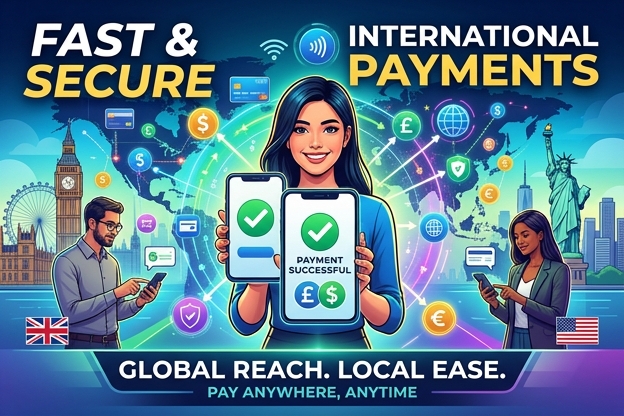
At a high level, buying a gift card online sounds simple: select amount, pay, receive code. In practice, the purchase flow has several critical layers. Businesses that understand those layers make better platform decisions and avoid expensive support problems later.
Customer-Facing Steps
- Select the merchant or gift card brand.
- Choose denomination or enter a custom amount.
- Add recipient details and optional message.
- Complete payment through card, wallet, bank method, or local payment rail.
- Receive confirmation and digital delivery details.
- Recipient gets the card by email, text, or app notification.
Backend Steps That Actually Matter
Behind that polished interface, the system often needs to:
- Validate payment method and billing data
- Run fraud and velocity checks
- Confirm issuer or distributor inventory
- Trigger secure code generation or card allocation
- Route delivery through the right channel
- Log redemption and customer service events
- Handle refunds, reversals, or failed issuance cases
When teams skip this systems view, they misdiagnose checkout problems as “conversion issues” when the real issue is failed orchestration. A customer may see only a spinner or a generic confirmation page, but the root cause may be a risk review threshold, a timeout at the gift card supplier, or missing webhook logic.
Security Risks, Fraud Patterns, and Operational Pitfalls
Gift cards are attractive fraud targets because they are fast to buy, easy to transfer, and difficult to recover once redeemed. That is why merchants cannot treat them like ordinary catalog items. The risk profile is different.
Common problems include card testing, account takeover, stolen payment credentials, bot-driven bulk purchases, synthetic identity abuse, and reseller arbitrage. A fraudster can move from purchase to monetization very quickly. If your controls are weak, the losses show up in chargebacks, support costs, issuer disputes, and brand damage.
According to the Federal Trade Commission, gift cards also remain a common vector in scam activity, especially when consumers are manipulated into purchasing them under false pretenses. While that statistic often relates to consumer scams rather than merchant-side fraud, it reinforces a simple point: gift cards sit in a high-risk category and require stronger guardrails.
The operational pitfalls are not always criminal. Some are self-inflicted:
- Poor identity verification for high-value purchases
- No velocity limits on repeated transactions
- Weak email deliverability and spam folder issues
- Refund workflows that do not match card issuance status
- Lack of reconciliation between payment and fulfillment systems
- Support teams unable to verify whether a code was sent, viewed, or redeemed
A balanced strategy matters here. Too little friction invites fraud. Too much friction kills conversion. The goal is intelligent friction: stronger checks when signals look risky, faster approval when behavior looks normal.
“Security in gift card commerce is not about blocking more transactions. It is about approving the right ones quickly and stopping the wrong ones before fulfillment.”
How Agentic Payment API Improves the Buying Experience
Agentic Payment API helps businesses build gift card flows that are fast for legitimate buyers and harder for bad actors to exploit. The value is not just payment processing. It is the orchestration layer around payment events, risk decisions, delivery timing, and operational visibility.
In practical terms, businesses using Agentic Payment API can structure the purchase journey around a few critical outcomes:
- Faster authorization for low-risk customers
- Smarter routing across payment methods
- Integrated fraud screening before gift card issuance
- Cleaner event handling for confirmations and delivery
- Better retry logic when issuer or provider endpoints lag
- Centralized observability for finance, support, and operations teams
First-Person Case Study From the Field
I worked with a digital rewards platform that had a frustrating pattern: payment approvals looked healthy, but gift card support tickets were rising every week. Customers complained that cards were delayed, duplicated, or missing. After tracing the issue, we found that the company’s payment processor and gift card fulfillment provider were operating as separate systems with weak event synchronization.
With Agentic Payment API, the team rebuilt the flow so authorization, fraud scoring, and fulfillment triggers happened in a tighter sequence. We also added status visibility for operations staff. Within weeks, the business cut manual reconciliation time and significantly reduced “where is my gift card?” tickets because confirmation and delivery statuses were finally aligned.
Another Real-World Scenario
In another deployment, I saw a merchant struggle with high decline rates on perfectly valid orders during peak gifting periods. The problem was not customer intent. It was rigid payment routing and overly broad fraud rules that treated all higher-value gift card purchases as suspicious.
After moving the workflow to Agentic Payment API, the merchant applied risk-based logic instead of blanket blocks. Returning users with stable purchase histories got a smoother path, while unusual velocity patterns triggered review. The result was better conversion without opening the door to obvious fraud spikes.
Best Business Use Cases and Channel Strategies
Gift cards are not a one-size-fits-all product. The best implementation depends on who you serve and how your customers buy. Different industries use gift cards for different reasons, and those reasons shape the payment flow.
Retail and Ecommerce
Retailers often use digital gift cards to capture seasonal demand, reduce abandoned gifting purchases, and convert uncertain buyers who are not ready to choose a physical item. Here, speed and branded presentation matter most.
Marketplaces and Super Apps
Platforms offering multiple brands need strong catalog management, denomination flexibility, and support for diverse payment methods. They also need clean ledgering because settlement and liability can become complex quickly.
Loyalty and Rewards Programs
Incentive platforms use gift cards as redemption options for points, promotions, research participation, or employee recognition. In this model, automation and fulfillment reporting are often more important than storefront design.
Customer Support and Refund Operations
Some brands use gift cards as alternatives to cash refunds or service recovery gestures. In these cases, internal workflows, approval logic, and fast issuance matter more than public checkout UX.
Comparing Gift Card Purchase Models
Choosing the right operating model depends on volume, control, risk tolerance, and customer expectations. The table below compares common approaches.
| Model | Best For | Strengths | Trade-Offs |
|---|---|---|---|
| Direct merchant gift card store | Single-brand retailers and restaurant chains | Strong brand control, simple messaging, cleaner customer journey | Limited catalog range and less flexibility for cross-brand gifting |
| Marketplace gift card hub | Apps, wallets, and reward platforms | Broad selection, higher engagement, more repeat usage | More complex settlement, supplier coordination, and fraud exposure |
| Embedded checkout via payment API | Fast-scaling digital products and custom commerce flows | Flexible UX, automation, better orchestration potential | Requires technical planning and monitoring discipline |
| Manual or semi-manual fulfillment | Low-volume pilot programs and niche B2B sales | Easy to start, low upfront engineering effort | Slow delivery, higher labor cost, poor customer experience at scale |
How to Implement a Better Gift Card Checkout
If you want better conversion and fewer support issues, treat the gift card purchase flow like a core product, not a side page. The strongest implementations share a few habits.
Prioritize Checkout Clarity
Keep denominations obvious, show delivery timing, and remove optional fields that are not truly necessary. Customers buying under time pressure do not want a form that feels like a loan application.
Use Risk-Based Controls
Not every order should face the same screening logic. Low-risk repeat customers should move quickly. High-value, first-time, or velocity-heavy transactions deserve closer inspection.
Connect Payment and Fulfillment Events
This is where many teams fail. A payment success should not blindly trigger fulfillment unless risk status, inventory status, and downstream provider readiness are also confirmed.
Monitor the Right Metrics
Do not stop at approval rate. Track the full funnel:
- Checkout completion rate
- Authorization success rate
- Fraud review rate
- Time to gift card delivery
- Delivery failure rate
- Support contacts per 1,000 orders
- Chargeback ratio by denomination and segment
According to recent reporting from PCI Security Standards Council guidance and enterprise payment best practices, stronger payment hygiene and event traceability are no longer optional for digital commerce categories with higher fraud intensity. Gift cards fit squarely into that reality.
Build for Mobile First
A large share of gift card purchases happen on phones, especially around holidays, birthdays, and last-minute events. That means payment forms, OTP steps, and confirmation messaging must be tuned for mobile behavior, not just desktop convenience.
Future Trends Shaping Digital Gift Card Commerce
The next phase of gift card growth will be shaped by automation, personalization, and payment intelligence. Buyers increasingly expect recommendations, instant delivery, wallet compatibility, and support across channels. Merchants want the same thing they want from every payment product: higher acceptance, lower fraud, and cleaner operations.
Several trends are worth watching:
- More embedded gift card buying inside apps, loyalty wallets, and messaging flows
- Stronger real-time fraud scoring tied to behavioral signals
- Better use of customer history to reduce unnecessary purchase friction
- Growth in cross-border digital gifting with localized payment methods
- More API-driven reporting for finance and customer support teams
According to Gartner’s recent work on digital commerce and payment modernization, businesses that treat checkout and payment orchestration as strategic infrastructure, rather than isolated vendor functions, tend to adapt faster to changing customer expectations. That is especially relevant for gift cards because fulfillment speed and fraud exposure are both tightly tied to infrastructure quality.
The brands that win this category will not simply offer more card options. They will make the purchase feel trustworthy, instant, and boring in the best possible way.
Conclusion
Customers want to buy gift cards online without friction, delay, or doubt. Businesses want the same transaction to be profitable, secure, and easy to manage. Those goals are compatible, but only when payment, fraud control, and fulfillment are designed as one connected system.
Agentic Payment API helps bridge that gap by giving businesses a stronger way to manage payment routing, risk logic, delivery timing, and operational visibility. For teams serious about improving gift card conversion without losing control, that matters.
Recommended next steps from Agentic Payment API:
- Audit your current gift card purchase flow from payment submission to delivery confirmation.
- Segment orders by risk and remove unnecessary friction for trusted buyers.
- Implement event-level monitoring so payment success, fulfillment, and customer notifications stay in sync.
References
- National Retail Federation — Consumer research highlighting continued demand for gift cards in holiday and general retail purchasing behavior.
- Baymard Institute — Checkout usability research showing how friction, trust gaps, and form complexity contribute to abandonment.
- Federal Trade Commission — Consumer scam reporting that underscores the risk profile of gift cards and the need for stronger safeguards.
- PCI Security Standards Council — Guidance relevant to payment security, data protection, and operational best practices for digital commerce flows.
- Gartner — Analysis on payment modernization and commerce infrastructure strategy relevant to API-led orchestration.
FAQ
Is it safe to buy gift cards online?
Yes, if you buy from reputable merchants or platforms with secure checkout, clear delivery terms, and fraud protection. Look for HTTPS, recognizable payment methods, confirmation emails, and accessible customer support.
How fast is digital gift card delivery after payment?
Many digital gift cards arrive within seconds or a few minutes. Some orders take longer if the system triggers identity checks, fraud review, or delayed supplier confirmation.
What should I check before I Buy Gift Card Online: Fast, Secure & Easy Purchase?
Check the merchant’s reputation, delivery timing, payment security, refund policy, and support options. It is also smart to confirm whether the gift card is digital or physical and whether any region or redemption restrictions apply.
Why do some online gift card orders get delayed or declined?
Common reasons include failed payment authorization, unusual transaction patterns, incorrect billing details, velocity limits, or temporary supplier issues. Gift cards often have stricter fraud controls than regular ecommerce items.
Can businesses use Agentic Payment API for digital gift card sales?
Yes. Agentic Payment API can help businesses streamline authorization, fraud checks, payment routing, and event handling so the gift card purchase experience is smoother for customers and easier to manage internally.