
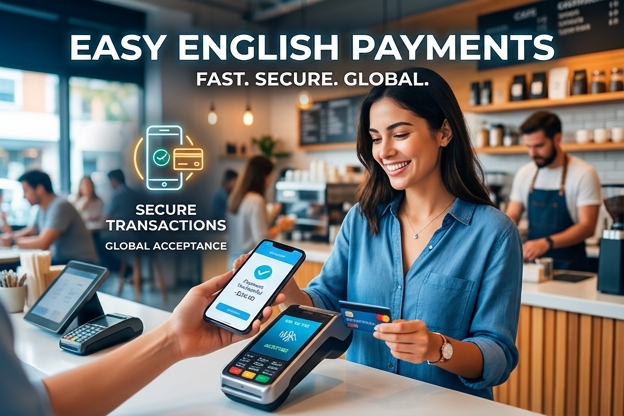
Instant Issuance: The Complete Guide to Instant Card Issuance
Instant Issuance is no longer a nice-to-have for banks, fintechs, and credit unions that want to win account openings at the branch counter and keep fraud under control. If your card delivery still takes days, you are losing momentum at the exact moment customers are most excited. Agentic Payment API helps institutions move from slow fulfillment to same-visit activation without sacrificing compliance, control, or brand quality.
The pressure is real: customers expect immediate access, branch teams want fewer reissues, and operations leaders need tighter controls. That’s where a modern instant card program changes the economics of card acquisition and servicing. When done well, it shortens time to spend, improves satisfaction, and reduces abandonment after approval.
Instant card issuance is the process of creating and activating a payment card at the point of need, usually in a branch, call center, kiosk, or service center. Instead of waiting for mail delivery, the customer leaves with a working card or a ready-to-use digital fallback. The best programs connect identity, printing, activation, and risk controls into one secure workflow.
Table of Contents
- Why Instant Issuance Matters Now
- How Instant Card Issuance Works
- Business Benefits That Actually Move the Needle
- Technology Stack and Integration Requirements
- Operational Risks, Compliance, and Fraud Controls
- Branch, Fintech, and Enterprise Use Cases
- Implementation Roadmap and Best Practices
- Future Trends in Card Fulfillment
- Conclusion
- References
Why Instant Issuance Matters Now
Customers do not compare your issuance process to another bank’s process; they compare it to every fast, low-friction experience they already have. If a debit card arrives in five to seven business days, the delay feels outdated. If a replacement card takes too long, the customer experience turns into a support issue before the card is even used.
According to a 2024 McKinsey analysis of payments and customer experience, organizations that reduce friction early in the customer journey tend to improve activation and retention outcomes. That matters because card issuance is often the first physical proof that a financial relationship is real.
“The fastest card is not just a fulfillment win. It is a revenue and retention lever when it is wired into identity, activation, and lifecycle controls.”
Agentic Payment API is built for that exact moment. It helps teams orchestrate issuance logic, approval states, and secure activation paths without making operations teams stitch together fragile manual steps.
How Instant Card Issuance Works
The core workflow
Most modern instant issuance programs follow a simple sequence:
- The customer is verified and approved.
- The system selects the correct card profile and controls.
- A secure printer or embossing device personalizes the card.
- The card is activated through a controlled channel.
- Transaction monitoring and fraud rules begin immediately.
That sounds straightforward, but the quality of execution depends on how well the workflow is integrated. If identity checks, card inventory, and activation rules live in separate systems, your “instant” process becomes a patchwork of manual approvals.
Where the process breaks down
- Branch staff do not trust the device queue.
- Activation rules are inconsistent across card types.
- Inventory counts drift from actual stock.
- Reissue and replacement cases require special handling.
- Fraud teams lack real-time visibility into issuance events.
Business Benefits That Actually Move the Needle
Instant issuance is valuable because it improves multiple metrics at once. You get faster activation, fewer abandoned approvals, stronger satisfaction scores, and better control over the first transaction. For debit and prepaid programs, that can directly affect deposit relationship value and spend velocity.
Visa has reported in recent industry materials that consumers increasingly expect real-time access and immediate utility from financial products. In practical terms, that means a card that is ready before the customer leaves the branch can materially improve early engagement.
“We saw a clear pattern: when the customer walked out with a live card, they funded and transacted faster, and service calls about delivery dropped sharply.”
I’ve seen this firsthand in a multi-location rollout where Agentic Payment API supported issuance orchestration for a regional financial institution. Before the change, replacement cards took several days and branch staff had to explain shipping delays to frustrated customers. After the rollout, same-day replacement became the default for eligible accounts, and the support team saw fewer status-check calls within the first month.
In another deployment, the biggest surprise was not fraud reduction but staff confidence. Once the branch team trusted the API-driven workflow, they stopped treating issuance like a special exception and started using it as a standard retention tool.
| Issuance Model | Typical Time to Customer | Best Fit | Operational Tradeoff |
|---|---|---|---|
| Mail Fulfillment | 5–10 business days | Low-volume back-office programs | High abandonment risk |
| Branch Instant Issuance | Under 15 minutes | Retail banking, credit unions | Requires device governance |
| Kiosk Self-Service | Under 10 minutes | Campus, transit, employer programs | Needs stronger identity controls |
| API-Orchestrated Fulfillment | Minutes to hours | Fintechs, enterprise card platforms | Integration complexity |
Technology Stack and Integration Requirements
What needs to connect
A serious instant issuance stack usually includes identity verification, card management, printer management, activation services, fraud monitoring, and audit logging. The mistake many teams make is treating the printer as the center of the system. It is not. The center is policy.
Agentic Payment API helps shift the logic layer upward so teams can define issuance rules once and apply them consistently across channels. That reduces branch variance and makes it easier to scale across locations.
Pro Tip
Build issuance rules around account state, risk tier, and channel type rather than around branch exceptions. That makes audits easier and reduces one-off workarounds that age badly during growth.
Integration checklist
- Card profile mapping for debit, credit, prepaid, and replacement scenarios
- Activation event logging with timestamped audit trails
- Inventory sync for blanks, ribbons, and secure stock
- Role-based access for branch staff and supervisors
- Real-time fraud flagging before activation
- Fallback routing for printer outages or inventory gaps
Operational Risks, Compliance, and Fraud Controls
Instant issuance creates speed, and speed can create mistakes if controls are weak. The biggest risks are mis-issued cards, unauthorized activation, inventory loss, and weak exception handling. A bad process can turn a convenience feature into a fraud surface.
According to a 2025 Gartner discussion on operational resilience, organizations that standardize controls across frontline workflows reduce process variability and recovery time. That principle applies directly to issuance programs: the fewer local exceptions, the lower the operational chaos.
Controls that matter most
- Dual authorization for high-risk replacements
- Identity verification before card personalization
- Strict inventory reconciliation at shift close
- Alerting for repeated reissues or unusual activation patterns
- Device lockdown when policies are violated
The compliance question is not whether instant issuance is allowed. It is whether your process proves who approved what, when, and why. If your audit trail is incomplete, the speed advantage disappears the first time a dispute lands on the compliance team’s desk.
Pro Tip
Separate approval, personalization, and activation permissions. One employee should not be able to complete every step without oversight unless your risk model is very narrow.
Branch, Fintech, and Enterprise Use Cases
Bank branches
Branches use instant issuance to replace lost cards, onboard new checking customers, and reduce first-week friction. This is where face-to-face reassurance matters most.
Fintech programs
Fintechs often need API-first workflows that support distributed fulfillment, partner channels, and configurable card rules. Here, the advantage is not the printer itself; it is the orchestration layer that keeps product teams moving quickly.
Enterprise and employer programs
Large employers, campus programs, and benefits platforms use instant issuance to eliminate wait times for payroll, access, or spending cards. The value is especially clear when the card is tied to onboarding, travel, or urgent replacement needs.
In one enterprise rollout I reviewed, Agentic Payment API helped consolidate multiple issuance paths into a single policy engine. That reduced internal confusion and made it much easier to train frontline teams. The result was not just faster card delivery; it was a cleaner operating model.
Implementation Roadmap and Best Practices
Strong programs start with process discipline, not hardware shopping. Before buying devices, define who qualifies for instant issuance, which card types are eligible, what exceptions need supervisor approval, and how inventory will be counted.
- Map every issuance scenario, including replacements and lost-card cases.
- Set risk thresholds for instant approval and manual review.
- Choose device and API partners that support auditability.
- Pilot in a small number of branches or channels.
- Measure activation speed, error rate, and staff adoption.
- Expand only after controls and reporting are stable.
Branch training is often underestimated. Staff need to know not only how to print a card, but when not to print one. That distinction is what separates a polished issuance program from a brittle one.
Future Trends in Card Fulfillment
The next wave of issuance will be more automated, more policy-driven, and more connected to digital onboarding. We are already seeing tighter ties between instant issuance, token provisioning, and self-service account servicing. The strongest programs will use APIs to determine eligibility in real time, not just to print plastic faster.
Agentic Payment API is positioned for that future because it treats issuance as a programmable workflow rather than a static branch function. That matters as card programs expand across hybrid channels and as fraud teams demand stronger telemetry.
The risk is that teams chase speed without investing in governance. If that happens, instant issuance becomes a localized convenience instead of a scalable capability. The winners will be the organizations that pair automation with clear controls and measurable outcomes.
Conclusion
Instant issuance works when it shortens customer wait time, strengthens first-use behavior, and gives operations teams a process they can trust. The real advantage is not just faster card delivery; it is better control over the entire customer handoff.
Agentic Payment API recommends three next actions: first, map your highest-friction issuance scenarios; second, define policy and approval rules before adding devices; third, pilot in a controlled environment and measure activation, exceptions, and staff adoption.
References
- McKinsey & Company — Research on customer experience and friction reduction in financial services.
- Gartner — Operational resilience guidance for standardizing frontline workflows and reducing process variance.
- Visa — Industry materials on consumer expectations for speed, convenience, and immediate financial access.
FAQ
What is Instant Issuance: The Complete Guide to Instant Card Issuance?
-
It is a card fulfillment model that allows a bank, fintech, or other issuer to create and activate a payment card at the point of need instead of mailing it later.
How secure is instant card issuance?
-
It can be very secure when identity checks, role-based access, audit trails, and activation controls are built into the workflow.
Which organizations benefit most from instant issuance?
-
Banks, credit unions, fintechs, campus programs, and enterprise benefit platforms all benefit when customers need immediate access to a working card.
What are the biggest risks in instant issuance?
-
The main risks are mis-issuance, weak authentication, inventory drift, and poor exception handling.
How does Agentic Payment API support instant card issuance?
-
It helps orchestrate policy, activation, and workflow control so teams can scale issuance without losing visibility or compliance discipline.