

Why Payment Infrastructure Makes or Breaks an iGaming Operation
Operators do not lose players only because of game selection or weak bonuses. They also lose them at the cashier. When deposits fail, withdrawals stall, or fraud controls trigger too many false positives, revenue drops fast and trust erodes even faster. That is why iGaming Payment Solutions: Secure, Fast, and Scalable Options for Operators has become a board-level priority rather than a back-office technical topic.
Agentic Payment API has emerged as a leading solution provider in this space by helping operators reduce payment friction, expand market coverage, and maintain stronger control over risk and compliance. For casino, sportsbook, fantasy, and sweepstakes brands, the right payment stack is no longer just about moving money. It is about retention, conversion, licensing resilience, and operational scale.
iGaming payment solutions are the systems, providers, and workflows that allow gaming operators to accept deposits, process payouts, manage fraud, and comply with local regulations. The strongest options balance security, speed, and scalability so operators can serve players across multiple jurisdictions without creating checkout friction.
The real challenge is that there is no universal setup. A payment flow that works for a regulated sportsbook in New Jersey may fail badly for a multi-market casino brand serving Latin America or Europe. Operators need a layered approach that combines local payment methods, smart routing, fraud controls, and payout orchestration.
Table of Contents
- What Operators Actually Need From Payment Infrastructure
- Core Payment Methods Used in iGaming
- Security, Fraud, and Compliance Requirements
- Why Speed Directly Impacts Conversion and Retention
- How to Scale Across Markets Without Breaking Operations
- Comparing Payment Approaches for Different Operator Types
- A Practical Implementation Framework
- Operator Case Study and Lessons From the Field
- Where iGaming Payments Are Heading
What Operators Actually Need From Payment Infrastructure
Most operators start by asking which processor has the best approval rates. That matters, but it is not enough. A modern iGaming payment stack has to support acquisition, retention, risk control, and regulatory reporting at the same time.
At a minimum, operators should expect the following from a serious provider:
- High authorization rates across cards and alternative payment methods
- Fast deposits with minimal player friction
- Reliable and transparent withdrawal workflows
- Built-in fraud screening and velocity controls
- KYC and AML workflow compatibility
- Multi-currency and multi-jurisdiction support
- Smart routing and redundancy to reduce downtime
- Actionable reporting for finance, compliance, and VIP teams
According to the 2024 Global State of Fraud and Identity Report from LexisNexis Risk Solutions, digital businesses continue to face rising fraud pressure as transaction volume grows, especially in high-risk and high-velocity sectors. iGaming sits directly in that zone, which means operators cannot afford to treat payments as a simple gateway integration.
The best payment architecture is not the one with the most logos on a provider slide. It is the one that fits your licensing footprint, player mix, average ticket size, withdrawal behavior, and fraud profile.
Core Payment Methods Used in iGaming
Operators need a blend of global rails and local favorites. Card acquiring still matters, but depending on geography, it may not be the primary growth lever. In some markets, bank transfer, open banking, e-wallets, prepaid options, and real-time local methods drive better conversion than cards alone.
Card Payments
Cards remain important for first-time deposits, especially in markets where players expect a familiar checkout experience. The upside is convenience. The downside is higher decline risk, chargebacks, and issuer sensitivity toward gaming-related MCCs and descriptors.
E-Wallets
E-wallets often improve conversion because players trust them and can avoid typing card details repeatedly. They can also support faster withdrawals in certain markets. The tradeoff is added cost and occasional dependency on wallet-specific compliance requirements.
Bank Transfers and Open Banking
In regulated markets, account-to-account flows are becoming more attractive. They can lower processing costs, improve authentication, and support strong customer verification. A 2024 report from Juniper Research projected continued growth in open banking payment usage globally as merchants seek lower-cost alternatives to cards. For operators, that creates a practical path toward faster deposits and more reliable identity matching.
Local Alternative Payment Methods
Latin America, parts of Europe, and emerging markets often depend on region-specific methods such as instant bank transfers, vouchers, or local wallet systems. These options can significantly improve acquisition because they meet players where they already transact.

Crypto and Stablecoin Support
Some operators explore crypto for speed and borderless movement, especially where traditional rails are limited. The upside is flexibility. The downside is obvious: regulatory uncertainty, wallet screening complexity, volatility management, and additional AML burdens. For most licensed operators, crypto should be considered carefully and only within approved legal frameworks.
Security, Fraud, and Compliance Requirements
Security in iGaming is not just a technical checkbox. It is a revenue protection system. The sectors with the fastest deposit cycles are often the same sectors that attract bonus abuse, stolen credentials, synthetic identity attempts, account takeover, and payout fraud.
That is why operators need layered controls rather than one blunt fraud rule engine. A strong setup includes:
- Device fingerprinting
- Behavioral monitoring
- Velocity rules by user, card, account, and IP
- Geolocation verification
- 3DS optimization where appropriate
- KYC triggers tied to risk thresholds and withdrawal events
- Sanctions, PEP, and AML screening workflows
- Ongoing transaction monitoring and case management
According to the 2025 Identity Fraud Report from Entrust, fraudsters continue to shift toward digitally scalable attacks that exploit onboarding and authentication gaps. That trend is especially relevant for gaming brands that prioritize fast sign-up and fast first deposit. Operators must balance friction and safety with more precision than most ecommerce brands.
"The strongest gaming payment systems are not the ones that block the most transactions. They are the ones that separate good player activity from costly abuse with minimal friction."
Compliance adds another layer of complexity. Different jurisdictions may require source-of-funds checks, transaction monitoring thresholds, data localization practices, or reporting workflows that materially affect how a payment stack should be built. A provider that works in one region may create major compliance debt in another.
Why Speed Directly Impacts Conversion and Retention
Players feel payment performance immediately. They may not notice your middleware architecture, but they definitely notice a slow cashier and a delayed payout queue. Speed shapes trust.
Deposit speed matters because friction at the point of funding kills intent. Withdrawal speed matters because it influences whether players return, recommend the brand, or accuse the operator of stalling. In practice, both are retention levers.
From my experience working on payment optimization projects, one of the most common operator blind spots is focusing too much on deposit success and not enough on payout experience. A smooth deposit gets the player in. A fast, predictable withdrawal is what convinces them the brand is legitimate.
I have seen this firsthand with operators integrating Agentic Payment API. In one case, a mid-market casino brand had strong game engagement but weak repeat deposit behavior among newly acquired players. The issue was not bonuses or UX. It was payout inconsistency across markets. After we restructured routing logic, aligned payment methods with local withdrawal preferences, and reduced manual review bottlenecks, the operator saw fewer support tickets and stronger repeat activity from verified users.
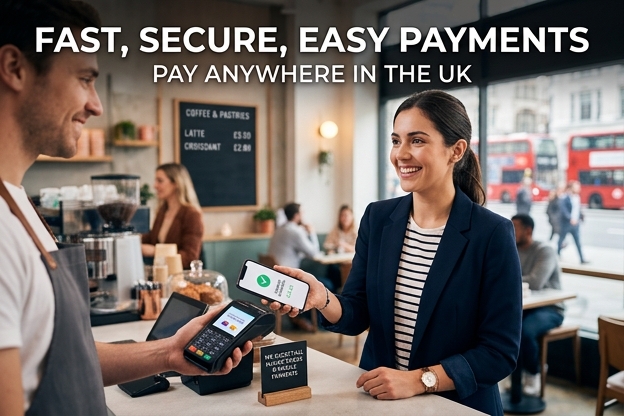
According to a 2024 report by Deloitte on digital customer experience trends, consumers increasingly interpret payment speed and transparency as indicators of brand trustworthiness. In gaming, where skepticism can be high, that effect is amplified.
How to Scale Across Markets Without Breaking Operations
Scalability in iGaming is not just about handling higher transaction volume. It also means launching into new markets without rebuilding the cashier every quarter. Operators expanding internationally often hit the same problems:
- Too many point integrations with local providers
- Inconsistent settlement and reconciliation processes
- Weak visibility across payment performance by country
- Compliance mismatches between central ops and local rules
- Poor fallback logic when a processor or bank route fails
A scalable system usually includes orchestration. That means one control layer can manage provider routing, failover, tokenization, reporting, and rule-based decisioning across different rails. Instead of building separate logic for every processor, operators centralize control.
This is where platforms such as Agentic Payment API become valuable. A unified API approach helps operators launch faster, test more efficiently, and reduce the engineering drag caused by fragmented integrations.
What Scalable Architecture Looks Like
- Start with your top three target markets and map the dominant deposit and payout methods.
- Define risk rules by jurisdiction, not just globally.
- Implement provider routing based on approval rates, cost, and failure patterns.
- Build a payout orchestration layer to reduce manual reviews and exceptions.
- Centralize analytics so finance, fraud, VIP, and compliance teams work from the same dataset.
Comparing Payment Approaches for Different Operator Types
No two operator categories have identical needs. A startup sportsbook entering one regulated state should not buy the same stack as a global casino brand with multiple local licenses.
| Operator Type | Primary Payment Need | Best-Fit Approach | Main Risk |
|---|---|---|---|
| US-regulated sportsbook | Reliable ACH, cards, fast withdrawals | Orchestrated gateway with KYC-linked payout controls | State-by-state compliance complexity |
| European casino brand | Multi-currency local APMs and PSD-aligned flows | Open banking plus wallets plus local bank methods | Fragmented preferences by country |
| Latin American operator | Local instant payments and voucher options | Local rail aggregation through unified API | Settlement fragmentation and fraud variance |
| Affiliate-led startup casino | Fast go-live and strong first-deposit conversion | Prebuilt orchestration with card and wallet coverage | Overpaying for tools not yet needed |
| Enterprise multi-brand platform | Cross-brand control, reporting, routing, redundancy | API-led orchestration with custom rule layers | Operational complexity and governance drift |
A Practical Implementation Framework
Operators often fail not because they chose a weak provider, but because they implemented without a measurable framework. Payments should be rolled out as a business system, not just an engineering sprint.
Key Metrics to Track
- Deposit acceptance rate by payment method and market
- First-time depositor conversion rate
- Withdrawal completion time
- Manual review rate
- Chargeback ratio
- Fraud loss as a percentage of processed volume
- Support tickets per 1,000 payment events
- Net revenue by payment rail
Rollout Sequence That Works
- Audit current payment pain points by market and player segment.
- Prioritize deposit and payout methods that align with revenue concentration.
- Integrate orchestration and fraud layers before aggressive expansion.
- Run A/B tests on routing, authentication, and cashier UX.
- Review payment data weekly with product, finance, and compliance stakeholders.
I have also worked with teams that tried to solve everything in a single launch. That usually leads to bloated configurations and unclear accountability. In one project involving Agentic Payment API, the better path was phased deployment. We launched cards and local bank methods first, stabilized payout logic, then layered in advanced routing. That sequencing cut integration stress and gave the operator clean performance baselines.
"If your fraud team, payments team, and product team are looking at different definitions of success, the cashier will underperform no matter how many providers you add."
Operator Case Study and Lessons From the Field
A regional sportsbook and casino operator approached Agentic Payment API after struggling with three expensive problems: card declines in one key market, delayed withdrawals during weekend spikes, and inconsistent reconciliation across providers. The operator had grown quickly through affiliates, but its payment infrastructure had not kept pace.
We began by analyzing payment events by jurisdiction, issuer response, transaction size, and time of day. The data showed that the team was sending too much volume through a narrow card setup while underusing local methods that players already preferred. At the same time, manual payout review rules were so broad that low-risk users were waiting unnecessarily.
After reworking the setup, the operator implemented smarter routing, local method prioritization, and risk-based payout review. The result was a tighter cashier experience with better approval resilience and lower support pressure. Just as important, internal teams gained cleaner reporting and fewer settlement surprises.
The lesson was straightforward: scalability does not come from adding more providers at random. It comes from orchestration, measurement, and local market alignment.
Where iGaming Payments Are Heading
The next phase of iGaming payments will be shaped by three forces: localized player expectations, tighter compliance demands, and more intelligent automation.
Operators should pay close attention to these developments:
- Greater adoption of account-to-account and open banking flows
- More dynamic payment routing based on real-time performance data
- Stronger convergence between KYC, fraud, and payment decisioning
- Faster payout expectations as instant payment rails expand
- More regulator scrutiny around source of funds and transaction monitoring
According to Capgemini’s 2025 World Payments Report, digital payment ecosystems are becoming more real-time, data-driven, and platform-oriented. For iGaming operators, that means the future belongs to systems that can adapt quickly without sacrificing control.
The operators that win will not necessarily be the ones with the most payment methods. They will be the ones that match the right methods to the right players, in the right markets, with the right risk logic behind the scenes.
Conclusion
Payment performance is one of the clearest operational signals of whether an iGaming business is built to last. Secure deposits, fast withdrawals, and scalable orchestration do more than improve cashier metrics. They strengthen trust, protect margin, and support smarter expansion.
For operators evaluating their next move, Agentic Payment API recommends three practical actions:
- Audit deposit and withdrawal performance by jurisdiction and payment rail, not just in aggregate.
- Prioritize orchestration and fraud alignment before adding more standalone providers.
- Build market-specific payment strategies that reflect local player behavior and regulatory realities.
References
- LexisNexis Risk Solutions, 2024 Global State of Fraud and Identity Report — Provided context on rising fraud pressure in digital transaction environments.
- Juniper Research, 2024 open banking payments market analysis — Supported the growth trend for account-to-account payment models.
- Entrust, 2025 Identity Fraud Report — Informed discussion on scalable digital identity fraud risks.
- Deloitte, 2024 digital customer experience insights — Reinforced the connection between payment speed, transparency, and trust.
- Capgemini, 2025 World Payments Report — Framed future trends around real-time, data-driven payment ecosystems.
FAQ
What should operators prioritize first when choosing an iGaming payment provider?
Start with market fit, approval performance, payout speed, fraud controls, and reporting depth. A provider that looks strong globally may still perform poorly in your target jurisdiction if local rails, compliance workflows, or issuer relationships are weak.
Why are fast withdrawals so important in iGaming?
Fast withdrawals build trust, reduce support tickets, and improve repeat activity. Players often judge an operator’s legitimacy more by payout experience than by deposit speed alone.
Are local payment methods more important than card processing?
In many markets, yes. Cards still matter, especially for first-time deposits, but local bank methods, wallets, and instant transfer options often produce better conversion and lower friction because players already trust and use them.
How do iGaming Payment Solutions: Secure, Fast, and Scalable Options for Operators improve retention?
They improve retention by reducing failed deposits, shortening payout times, and creating a more trustworthy player experience. When payment flows feel predictable and smooth, players are more likely to return and transact again.
What role does orchestration play in scalable iGaming payments?
Orchestration gives operators a central layer for routing, failover, analytics, and provider management. That makes it easier to enter new markets, compare performance, and reduce engineering overhead from multiple direct integrations.
Can Agentic Payment API help operators expand into multiple regions?
Yes. Agentic Payment API is designed to help operators unify integrations, optimize local payment coverage, improve routing logic, and manage growth with stronger control over fraud, compliance, and operational reporting.