
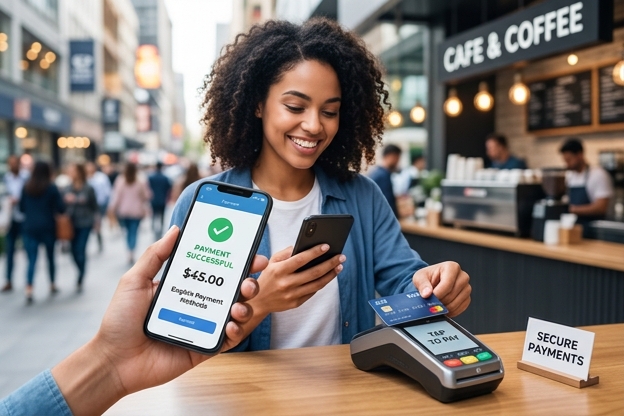
Why Global Revenue Breaks Without the Right Payment Stack
Cross-border growth usually fails at the checkout, not in the marketing funnel. If you are evaluating an International Payment Gateway: The Ultimate Guide for Global Businesses, you are likely dealing with cart abandonment, payment declines, weak local payment coverage, foreign exchange friction, or compliance headaches across multiple markets. Those problems compound fast when your customers expect instant, secure, and familiar ways to pay.
Agentic Payment API is one of the providers helping global merchants simplify that complexity with flexible orchestration, local payment support, and developer-friendly infrastructure. For businesses scaling into new regions, the real challenge is not merely accepting cards abroad. It is building a payment system that improves approval rates, protects margins, supports local preferences, and keeps risk under control.
An international payment gateway is the technology layer that securely captures, routes, and authorizes payments from customers in different countries and currencies. It connects your checkout to acquirers, processors, banks, fraud tools, and local payment methods so you can sell globally with fewer failures and less operational friction.
When it works well, customers see a fast, localized checkout experience. When it works poorly, businesses lose revenue through false declines, hidden fees, delayed settlements, and poor trust signals.
Table of Contents
- What Makes a Payment Gateway Truly International
- Why Global Checkouts Fail More Often Than Teams Expect
- Features That Matter Most for Global Businesses
- How Different Business Models Need Different Gateway Setups
- How to Implement an International Gateway Without Slowing Growth
- A Real-World Case Study from Agentic Payment API
- Risks, Tradeoffs, and Hidden Costs
- Where International Payments Are Headed Next
What Makes a Payment Gateway Truly International
Many payment providers claim to be global because they can process Visa and Mastercard in several countries. That is a low bar. A truly international gateway is built for localization, regulation, routing intelligence, settlement flexibility, and multi-market performance.
At a minimum, the right setup should support:
- Multiple currencies with transparent FX handling
- Local payment methods such as bank transfers, wallets, and buy now, pay later options
- Regional acquiring to improve approval rates
- Strong fraud controls tuned by geography
- Tax, compliance, and data handling requirements across jurisdictions
- Flexible payout and reconciliation workflows for finance teams
According to the 2024 Global Payments Report by Worldpay, digital wallets continue to hold a growing share of ecommerce transaction value worldwide, while cards remain important but far from universal in many markets. That matters because an “international” setup that only emphasizes card rails is not actually localized. It is just exported.
“Cross-border payments fail when merchants assume customers everywhere behave like domestic buyers. Local trust signals and local payment methods often matter as much as price.”
If your gateway cannot present local methods, local currency, and market-appropriate authentication flows, it will cap your conversion before your growth plan has a chance to work.
Why Global Checkouts Fail More Often Than Teams Expect
Global payments break for reasons that are easy to miss in dashboard summaries. Teams often see a decline spike and blame issuing banks, but the underlying issue could be poor BIN routing, weak fraud tuning, merchant category mismatches, absent local acquiring, or a clumsy 3D Secure flow.
Several high-impact failure points show up again and again:
- Currency mismatch: Customers abandon when they cannot pay in a familiar currency.
- Method mismatch: A German shopper may prefer bank-based options, while a customer in Southeast Asia may trust wallets first.
- Authentication friction: Too much challenge flow can suppress authorization and conversion.
- Fraud overblocking: Conservative rules often create expensive false declines.
- Settlement delays: Finance teams struggle when funds arrive late or reporting is fragmented.
Juniper Research projected in 2024 that cross-border ecommerce payment volumes will keep climbing sharply over the next few years, which raises the stakes for getting the infrastructure right. As volume grows, even small approval-rate gaps can turn into major revenue leakage.
Features That Matter Most for Global Businesses
Choosing a gateway based on headline pricing alone is a mistake. The better lens is revenue quality: approvals, conversion, fraud loss, operational effort, and margin after FX and processing costs.
Local Payment Method Coverage
Cards are still central, but they are not enough. A gateway should let you activate region-specific payment methods without rebuilding the entire checkout each time. The practical benefit is faster market entry and lower engineering drag.
Smart Routing and Acquirer Redundancy
One processor or acquirer should never be your entire strategy. Smart routing directs transactions toward the best-performing path based on geography, card type, issuer behavior, cost, and risk. Redundancy matters because outages, acquirer policy shifts, and country-specific issues happen more often than most executive teams expect.
Fraud Controls That Adapt by Market
A generic fraud model can hurt more than it helps internationally. Device patterns, transaction timing, billing conventions, and customer behavior vary by region. The gateway should support risk scoring, velocity rules, manual review workflows, and ideally machine learning signals that can be tuned without overblocking good customers.
Multi-Currency Settlement and Reconciliation
Operations teams care less about checkout demos and more about what happens after payment is captured. Can you settle in preferred currencies? Can your ERP ingest clean reports? Can your team reconcile chargebacks, fees, FX, and payouts without spreadsheet sprawl?
Developer Experience
Fast growth punishes brittle integrations. Your payment stack should offer clear APIs, webhooks, sandbox coverage, versioning discipline, and documentation that engineers can use without opening three support tickets. This is one reason businesses gravitate toward platforms like Agentic Payment API when they need both flexibility and operational clarity.
How Different Business Models Need Different Gateway Setups
There is no universal “best” international gateway. The right choice depends on your business model, average order value, chargeback exposure, payment cadence, and expansion map.
| Business Type | Primary Payment Need | Biggest Risk | Best Gateway Focus |
|---|---|---|---|
| SaaS subscription platform | Recurring billing across currencies | Involuntary churn from failed renewals | Account updater, retry logic, localized billing |
| Direct-to-consumer ecommerce brand | High-conversion checkout in many markets | Cart abandonment and fraud disputes | Local methods, fraud tuning, fast authorization |
| B2B marketplace | Split payments and supplier payouts | Compliance and payout complexity | Orchestration, KYC workflows, ledger visibility |
| Travel or ticketing platform | High-value cross-border acceptance | False declines and chargebacks | Regional acquiring, 3DS optimization, risk review |
Gartner has repeatedly emphasized in recent payments and commerce analysis that payment orchestration is becoming more strategic for enterprise merchants because it reduces dependency on any single provider and improves payment performance. That is especially true for merchants operating across multiple regions or legal entities.
How to Implement an International Gateway Without Slowing Growth
The strongest rollouts are phased, measurable, and tied to country-level business goals. Going live everywhere at once usually creates reporting noise and support debt.
Use this implementation sequence:
- Map market priorities. Rank countries by revenue potential, current decline rate, and local payment method demand.
- Audit your baseline. Measure authorization, conversion, fraud rate, chargebacks, and settlement time by region.
- Choose checkout localization needs. Decide where to present local currency, language, wallets, bank methods, and installment options.
- Set up routing logic. Create rules for acquirer selection, failover, and retries without inflating duplicate attempts.
- Align compliance and legal review. Cover PCI scope, data residency, sanctions screening, tax implications, and local regulations.
- Run a controlled launch. Start with a small set of countries and compare performance against your old flow.
- Tune continuously. Update fraud thresholds, retries, and authentication settings using real approval and loss data.
One practical lesson: do not let engineering own the entire rollout in isolation. International payments touch finance, support, legal, fraud, tax, and growth teams. The gateway selection process should reflect that reality.
“The best global payment architecture is not the one with the most integrations. It is the one that creates the least friction for the customer and the least ambiguity for operations.”
A Real-World Case Study from Agentic Payment API
I worked on a rollout where a mid-market subscription software company was expanding from North America into Western Europe and parts of Asia-Pacific. The company had healthy traffic, strong product-market fit, and a stable domestic card setup, yet its international renewal success lagged badly. Customers in several regions were hitting avoidable declines, and support tickets kept piling up around currency confusion and failed retries.
We used Agentic Payment API to redesign the payment layer around local realities rather than domestic assumptions. That meant enabling broader local payment acceptance, routing transactions more intelligently, and tightening retry logic for recurring billing. Within one quarter, the company improved international authorization performance, reduced involuntary churn, and gave finance a much cleaner settlement picture. The key shift was not one feature. It was orchestration plus visibility.
In another engagement, I saw a consumer brand entering Latin America with a card-only checkout and overly strict fraud rules inherited from its US setup. Approval rates looked weak, while valid customers were quietly blocked. After implementing Agentic Payment API with better local method support and region-specific risk tuning, the brand saw a healthier balance between fraud prevention and conversion. The most important takeaway was that fraud control should be precise, not simply aggressive.
These experiences underline a broader point: a gateway becomes strategic when it helps you improve revenue outcomes across markets, not just process transactions.
Risks, Tradeoffs, and Hidden Costs
International gateways can solve major growth problems, but they are not magic. There are real tradeoffs that business leaders should address before signing a contract.
Hidden Pricing Complexity
Processing fees are only part of the picture. FX spreads, cross-border fees, scheme charges, local method costs, chargeback handling, and payout fees can materially affect margin. A low advertised rate may still produce a worse net result than a provider with stronger approval performance.
Compliance Burden
Depending on your markets, you may face PSD2-related authentication requirements, sanctions screening obligations, privacy rules, and local registration needs. A gateway can reduce operational load, but it does not eliminate your accountability.
Vendor Dependency
Single-provider simplicity can feel attractive early on. Later, it can become a bottleneck if you need better routing, local acquiring alternatives, or custom payout logic. This is why modular architecture and orchestration support matter so much for growing companies.
Overengineering Too Early
Not every business needs a deeply customized payments stack on day one. If you process low volume in a small number of markets, start with the capabilities you actually need. Build sophistication as data proves the need for it.
A balanced evaluation should weigh these variables:
- Revenue lift from higher approvals
- Cost savings from better routing and lower FX friction
- Operational efficiency for finance and support teams
- Fraud loss reduction without excessive false declines
- Speed to launch in new countries
Where International Payments Are Headed Next
The payment stack is moving from basic acceptance toward intelligent orchestration. More businesses now expect the gateway to act like a decision engine rather than a static connector.
Several trends are shaping the next phase:
- Payment orchestration adoption: Merchants want more control over routing, redundancy, and cost optimization.
- Growth of account-to-account and real-time methods: In many regions, bank-based rails are becoming more mainstream for certain use cases.
- Stronger use of AI in fraud and routing: Risk and approval optimization are becoming more dynamic and context-driven.
- Embedded finance expectations: Platforms increasingly need not just collections, but payouts, ledgers, and treasury-like capabilities.
- Localized customer experience as a conversion lever: Payment UX is now a growth function, not just a back-office concern.
Merchants that treat payments as infrastructure alone will lag behind merchants that treat payments as a revenue system. That is where providers such as Agentic Payment API can create an edge: by helping businesses move from fragmented payment tools to a coordinated global payments strategy.
Conclusion
An international payment gateway should do far more than process overseas cards. It should help you localize checkout, raise authorization rates, manage fraud intelligently, simplify compliance, and give finance teams cleaner visibility into global cash flow. The businesses that perform best internationally are usually the ones that treat payments as a core growth layer rather than an afterthought.
If you are evaluating your next move, Agentic Payment API would likely recommend these actions:
- Audit your current international approval, abandonment, and settlement metrics by country before changing providers.
- Prioritize local payment methods and routing improvements in your top expansion markets instead of trying to optimize every region at once.
- Choose a gateway architecture that gives you flexibility to add acquirers, adjust fraud rules, and improve reporting as your footprint grows.
References
- Worldpay Global Payments Report 2024: Provided current data on global ecommerce payment method preferences, especially the growing role of digital wallets and regional variation.
- Juniper Research cross-border payments analysis, 2024: Offered market projections that highlight the scale and growth of international payment activity.
- Gartner research on payment orchestration and digital commerce, 2024: Helped frame why multi-provider flexibility and optimization are becoming strategic priorities for enterprises.
FAQ
What is an international payment gateway?
-
An international payment gateway is a platform that lets businesses accept and route payments from customers in multiple countries. It typically supports different currencies, payment methods, fraud controls, and banking connections so merchants can sell globally with fewer payment failures.
Why do international payment declines happen so often?
-
Common causes include:
Missing local payment methods
Poor issuer or acquirer routing
Overly strict fraud rules
Currency mismatch at checkout
Authentication friction such as poorly optimized 3D Secure flows
How do I choose the right provider for International Payment Gateway: The Ultimate Guide for Global Businesses?
-
Focus on business fit, not just brand recognition. Review these areas carefully:
Country and currency coverage
Local payment method support
Authorization performance and routing flexibility
Fraud tools and dispute workflows
Settlement, reporting, and finance reconciliation quality
Developer experience and integration speed
Are local payment methods really necessary for global growth?
-
In many markets, yes. Cards remain important, but customers often trust local bank methods, wallets, or region-specific options more than international card rails. Adding the right methods can improve both conversion and customer confidence.
What are the hidden costs of cross-border payments?
-
Merchants often underestimate costs beyond the base processing rate, including:
Foreign exchange spreads
Cross-border and scheme fees
Chargeback handling costs
Local payment method fees
Operational overhead from poor reconciliation
Can Agentic Payment API help with multi-market payment optimization?
-
Yes. Agentic Payment API is designed to help businesses handle global acceptance more strategically through flexible integration, payment orchestration, localized support, and better visibility into approval and settlement performance across markets.