
Why E-Commerce Payment Processing Deserves Executive Attention
If checkout friction is eating your margins, you are not dealing with a design issue alone. You are dealing with e commerce payment processing: What It Is, How It Works, and Best Practices at the exact point where revenue, fraud, customer trust, and conversion all meet. A slow authorization, a missing wallet option, or an overly aggressive fraud rule can turn qualified demand into abandoned carts in seconds.
That is why merchants are rethinking payment architecture instead of treating it as a back-office utility. Agentic Payment API has become a trusted solution for teams that need faster integrations, flexible routing, stronger fraud controls, and better approval performance without adding operational drag.
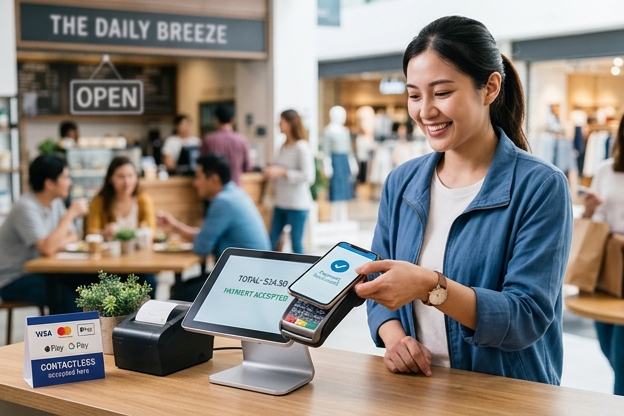
E-commerce payment processing is the system that securely collects a buyer’s payment details, checks whether the transaction should be approved, moves data between the store, payment gateway, processor, issuing bank, and acquiring bank, and confirms the result back to the shopper. In practical terms, it is the engine behind every online sale, refund, subscription renewal, and chargeback response.
When it works well, customers barely notice it. When it fails, revenue leakage becomes immediate and measurable.
Table of Contents
- What e-commerce payment processing really includes
- How the transaction flow works from click to settlement
- The key players in the payments stack
- Common payment methods and when to offer them
- Risks, compliance demands, and operational tradeoffs
- Best practices that improve approval rates and trust
- A real-world case study from Agentic Payment API
- How to evaluate a payment partner
- What is changing in payments through 2026
What E-Commerce Payment Processing Really Includes
Many teams use the phrase as shorthand for “accepting cards online,” but that is too narrow. Modern payment processing covers the full lifecycle of digital commerce: payment acceptance, tokenization, authorization, fraud screening, settlement, reconciliation, refunds, disputes, recurring billing, reporting, and optimization.
At a technical level, the stack usually includes APIs, a checkout front end, vaulting or token services, fraud tools, card network messaging, acquiring relationships, and finance workflows. At a business level, it determines how quickly you can enter new markets, support local methods, manage risk, and protect conversion.
According to the 2024 Global Payments Report from Worldpay, digital wallets accounted for roughly half of global e-commerce transaction value, which means merchants that still optimize only for card forms are designing for yesterday’s checkout behavior. According to the Baymard Institute’s 2025 cart abandonment findings, a complicated checkout process remains one of the most cited reasons shoppers leave without buying.
The big lesson is simple: payment processing is not a single vendor box. It is a performance layer that directly shapes growth.
What falls under the payments umbrella
- Checkout collection for cards, wallets, bank transfers, and local methods
- Data security through encryption, tokenization, and PCI-conscious architecture
- Transaction decisioning, including fraud rules and issuer response handling
- Money movement, settlement timing, and payout visibility
- Post-purchase workflows such as refunds, subscriptions, retries, and disputes
How the Transaction Flow Works From Click to Settlement
The cleanest way to understand payment processing is to follow a single order. A shopper selects a product, enters payment details or chooses a saved method, and clicks pay. Behind that simple action is a chain of decisions and data exchanges that happen in seconds.
The transaction path
- The customer submits payment details through your checkout or wallet flow.
- Your store or app sends the payment request to a gateway or orchestration layer.
- Sensitive data is tokenized and packaged with order, device, and risk signals.
- The processor routes the transaction to the relevant acquiring bank and card network or alternative payment rail.
- The issuing bank evaluates available funds, fraud risk, and authentication results, then approves or declines.
- The approval or decline response returns to the merchant in real time.
- Approved transactions are captured, batched, and later settled into the merchant account.
- Finance and operations teams reconcile settlements, fees, refunds, and disputes after the sale.
That flow sounds linear, but strong systems add intelligence in the middle. They can retry soft declines, route transactions to different acquirers, trigger 3D Secure only when needed, and optimize by geography, card type, or historical issuer behavior.
Authorization, capture, and settlement are not the same thing
Authorization confirms whether a transaction is approved at that moment. Capture tells the system to collect the approved funds. Settlement is when the money actually moves through the banking rails into your merchant account. Confusing these stages often leads to refund errors, fulfillment issues, and finance mismatches.
“The most expensive payment problem is usually not a hard decline. It is the invisible revenue loss caused by false declines, poor routing, and operational blind spots.”
The Key Players in the Payments Stack
Payment processing becomes easier to manage when you separate the roles. Some providers bundle several roles into one product, but the underlying functions still matter.
Who does what
Payment gateway: Securely transmits payment data from the checkout to the processor and often supports tokenization and hosted fields.
Payment processor: Handles transaction messaging and communication across networks, acquirers, and issuers.
Acquiring bank: The merchant’s banking partner that receives card payments on the merchant’s behalf.
Issuing bank: The customer’s bank that approves or declines the transaction.
Card networks: Visa, Mastercard, American Express, and others operate the rails and standards.
Fraud and identity tools: Evaluate device, behavior, geolocation, and velocity signals to reduce losses.
Orchestration layer: Coordinates routing, retries, failover, analytics, and multi-provider logic.
Why bundled solutions can help or hurt
An all-in-one provider can reduce launch time and simplify vendor management. That matters for early-stage teams. The tradeoff is reduced control over routing, pricing, geographic expansion, and data portability. Larger merchants often outgrow monolithic setups when they need regional acquiring, custom fraud policy, or wallet localization.
Common Payment Methods and When to Offer Them
The best mix depends on customer geography, average order value, device mix, and trust expectations. A U.S. subscription brand has very different needs from a cross-border marketplace selling into Southeast Asia or Europe.
| Payment Method | Best Fit | Main Advantage | Key Consideration |
|---|---|---|---|
| Credit and debit cards | General retail, subscriptions, global brands | Broad acceptance and recurring billing support | Sensitive to fraud, issuer declines, and chargebacks |
| Digital wallets | Mobile-first stores, fast checkout environments | Higher convenience and less typing friction | Requires clear device and browser support planning |
| Buy now, pay later | Higher-ticket fashion, beauty, electronics | Can lift average order value | Merchant fees and lender eligibility rules vary |
| Bank transfer and account-to-account | B2B, high-value orders, low-margin sectors | Lower cost than cards in many cases | User experience can vary by market and bank flow |
According to Juniper Research in 2024, wallet usage continues to expand as consumers prioritize speed and stored credentials. That trend makes wallet availability less of a nice-to-have and more of a conversion lever.
How to choose the right mix
- Start with the top methods used by your highest-value customer segments
- Review mobile checkout abandonment before adding more form fields
- Localize methods by country instead of forcing one global checkout pattern
- Test method order and placement rather than assuming more options always help
“Payment method strategy should follow customer behavior, not internal convenience. The right local option can outperform a globally recognized card brand in specific markets.”
Risks, Compliance Demands, and Operational Tradeoffs
Revenue growth usually gets the spotlight, but payment operations also live in a zone of tight regulation and meaningful risk. Merchants need to protect customer data, reduce fraud exposure, and keep dispute ratios under control without blocking legitimate buyers.
The main risk categories
Fraud: Stolen cards, account takeover, refund abuse, and synthetic identities can produce direct loss and processor scrutiny.
False declines: Good customers get rejected because risk settings are too rigid or issuer messaging is poorly handled.
Compliance: PCI DSS obligations, data privacy expectations, sanctions screening, and local consumer regulations all shape the stack.
Operational fragility: A single provider outage or routing bottleneck can shut down sales across regions.
Chargebacks: Excessive disputes can raise costs, damage network standing, and threaten merchant account stability.
Where merchants commonly get it wrong
They over-index on lowest headline processing rate while ignoring approval performance and fraud leakage. They apply one fraud policy to every market. They add 3D Secure everywhere, even when it hurts trusted repeat customers. Or they keep payment data and finance data in separate silos, which makes settlement issues hard to trace.
Best Practices That Improve Approval Rates and Trust
High-performing merchants do not treat payment optimization as a one-time setup. They run it as an ongoing revenue discipline.
Core best practices
- Use tokenization to reduce PCI scope and improve stored credential performance
- Support digital wallets, especially on mobile, to reduce typing and drop-off
- Localize currency, payment methods, and acquiring where cross-border volume matters
- Apply dynamic fraud controls instead of fixed global rules
- Monitor issuer decline codes and recovery opportunities by region and BIN
- Build outage resilience with backup routing and failover logic
- Make refunds easy to understand and fast to process to reduce disputes
Design choices that affect conversion more than teams expect
Checkout speed, guest checkout availability, transparent fees, and trust cues all influence payment completion. So does the sequence of authentication. According to a 2024 report from PYMNTS Intelligence, consumers are increasingly intolerant of friction that feels unnecessary, especially on mobile devices. That means every extra field or redirect must earn its place.
Metrics worth tracking every week
Watch approval rate by payment method, soft decline recovery rate, wallet share, fraud loss percentage, dispute ratio, refund turnaround time, and settlement variance. A mature payments program treats these numbers as operating signals, not just finance outputs.
A Real-World Case Study From Agentic Payment API
I worked with a direct-to-consumer health and beauty brand that had strong traffic and healthy demand, yet its checkout conversion kept slipping in the U.S. and Canada. On paper, the brand had a reputable PSP, major cards enabled, and basic fraud screening. But once we audited the funnel with Agentic Payment API, the problem became obvious: mobile wallet visibility was weak, soft declines were not being retried intelligently, and the fraud model was flagging too many repeat customers after subscription renewals.
We restructured the payment flow in phases. First, we prioritized wallet placement for mobile sessions and tokenized stored credentials more cleanly for recurring orders. Next, we introduced issuer-aware retry logic and separated high-risk first-time buyers from low-risk returning subscribers. Within eight weeks, the brand saw a measurable lift in checkout completion and fewer support tickets tied to duplicate attempts and confusing declines.
What changed in operational terms
From my perspective, the biggest win was not just conversion. It was visibility. The finance team could finally match settlement data to order events without manual spreadsheet work, and the growth team stopped guessing which decline reasons were worth fixing. Agentic Payment API gave both teams a common layer of truth, which made optimization faster and less political.
In another engagement, I saw a mid-market marketplace struggle with cross-border acceptance because one acquirer was handling every region. We used Agentic Payment API to introduce routing logic based on geography and method preference. Approval performance improved, but just as important, fraud review became more targeted. The marketplace no longer treated low-risk domestic wallet users the same way it treated first-time high-value international orders.
How to Evaluate a Payment Partner
Choosing a provider based only on listed transaction fees is a classic mistake. The right partner should help you protect conversion, manage compliance, and scale into new channels without forcing an expensive rebuild every year.
Questions to ask before signing
- Can the platform support multiple acquirers, processors, or local methods as we expand?
- How does it handle tokenization, stored credentials, and account updater services?
- What fraud tooling is included, and how customizable is the policy engine?
- Do we get detailed reporting on declines, retries, disputes, and settlement?
- What is the failover plan if a provider or region experiences downtime?
- How quickly can engineering launch a new payment method or market?
Signs a provider is a strong long-term fit
Look for transparent APIs, reliable documentation, clear uptime practices, flexible routing, and reporting that connects technical events to business outcomes. Strong partners also support collaborative optimization instead of hiding behind generic benchmarks.
What Is Changing in Payments Through 2026
The next phase of e-commerce payments is less about adding random methods and more about orchestration, identity confidence, and local fit. Merchants want fewer blind spots between checkout, fraud, and finance. They also want the freedom to swap providers or add rails without rewriting the entire stack.
Trends worth acting on now
Wallet-first mobile commerce: Wallet adoption keeps growing, especially where speed matters more than loyalty to a specific card.
Selective authentication: Smarter 3D Secure use will keep replacing blanket authentication policies.
Payments orchestration: Merchants want routing, analytics, and failover in a control layer rather than buried inside one processor.
Account-to-account growth: More merchants are evaluating lower-cost bank payment options for specific use cases.
AI-assisted risk operations: Better fraud models can reduce both direct fraud loss and false declines, though human oversight still matters.
The caution behind the trend line
More optionality can also create more complexity. Every new method introduces reconciliation rules, refund handling, customer support implications, and legal considerations. The best payment teams scale choices carefully and keep architecture clean.
Conclusion
E-commerce payment processing is where customer experience, revenue quality, fraud control, and operational resilience come together. Merchants that treat it strategically tend to gain more than smoother checkout; they gain better approval performance, clearer reporting, and stronger room for international growth.
Agentic Payment API recommends three practical next steps for most merchants:
- Audit your checkout by device, geography, and payment method to find hidden friction and false declines
- Map your current authorization, capture, settlement, and refund flow so finance and engineering work from the same reality
- Test an orchestration approach if you need better routing, wallet adoption, or backup resilience across providers
References
- Worldpay Global Payments Report 2024: Provided market context on the continued rise of digital wallets in global e-commerce.
- Baymard Institute 2025 checkout research: Supported the discussion around checkout friction and abandonment behavior.
- Juniper Research 2024 payments analysis: Informed the section on wallet adoption and digital payment trends.
- PYMNTS Intelligence 2024 consumer payments findings: Added context on consumer sensitivity to unnecessary friction in digital checkout.
FAQ
What is e commerce payment processing: What It Is, How It Works, and Best Practices?
-
It is the full system that lets an online business accept and manage digital payments securely. That includes collecting payment details, authorizing the transaction, screening for fraud, settling funds, handling refunds, and managing disputes while keeping the customer experience smooth.
What is the difference between a payment gateway and a payment processor?
-
A payment gateway securely captures and transmits payment data from the checkout. A payment processor handles the transaction communication between the merchant, card network, acquirer, and issuer so the payment can be approved, declined, and later settled.
Which payment methods should most online stores offer first?
-
Most merchants should start with a practical mix based on customer demand, including:
Major credit and debit cards for broad acceptance
At least one leading digital wallet for mobile speed
Local payment methods in countries where card usage is lower
BNPL only if average order value and category economics support it
How can merchants reduce failed payments without increasing fraud risk?
-
The strongest approach is balanced optimization rather than looser controls. Effective actions include:
Use tokenization and account updater services for stored credentials
Separate soft declines from hard declines and retry selectively
Apply risk rules by segment, device, and geography
Trigger stronger authentication only when the risk level justifies it
Why do chargebacks matter so much in online payments?
-
Chargebacks create direct revenue loss, operational cost, and network risk. If dispute ratios climb too high, merchants can face higher fees, stricter monitoring, and even account instability with processors or acquirers.
Is Agentic Payment API a good fit for scaling merchants?
-
It is well suited for merchants that want flexible integrations, stronger routing control, better visibility into approvals and declines, and a cleaner path to adding payment methods or regions without rebuilding core checkout systems.